
What a Business-Aligned IT Review Should Actually Cover
A good IT review should not read like a technical defect log. For most SMEs, that kind of output creates activity without creating direction. The real job of a business-aligned review is to help leadership decide what matters, what can wait, and what should be sequenced differently.
Start with the business context
A proper review begins with growth plans, operational priorities, compliance pressure, service risk, budget constraints, and decision bottlenecks. Without that context, technical findings are easy to overstate and hard to prioritise.
Assess the environment in business language
Infrastructure, software, Microsoft 365, access controls, backups, vendor arrangements, and documentation should all be reviewed. The findings should then be translated into operational language: where friction is rising, where resilience is weak, and where ownership is unclear.
Separate quick wins from structural issues
Most businesses need both. A review should identify practical short-term improvements that reduce noise in the next 90 days, while also showing the bigger structural work that requires planning, budget, or leadership approval.
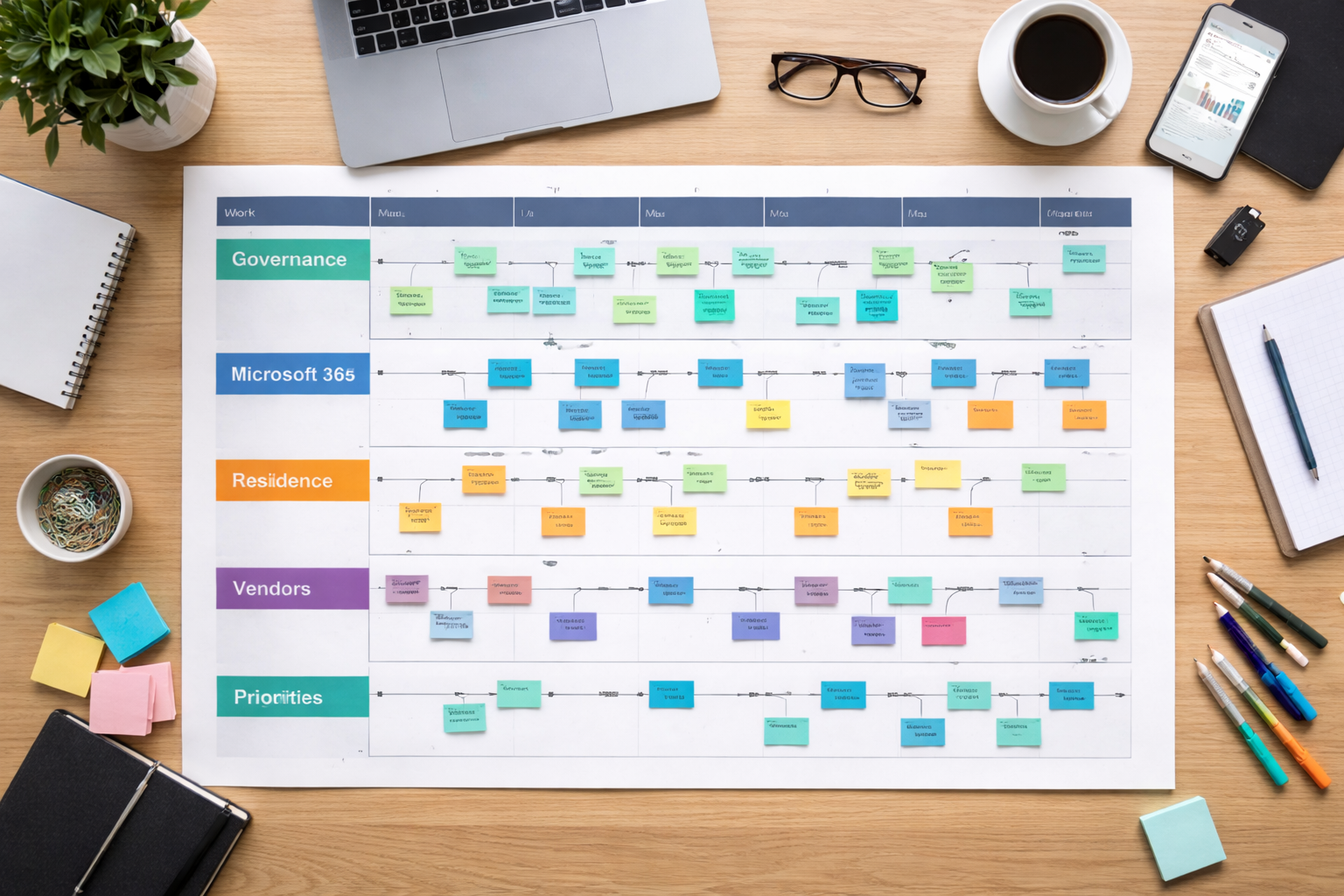
Produce a roadmap, not a punch list
The value is in sequencing. A roadmap should show dependencies, risk categories, budget buckets, and the order that will make implementation easier instead of harder.
Make the next step obvious
The output should help leadership answer a simple question: do we need a project, a support-model adjustment, or a more strategic oversight layer? That clarity is what makes the review commercially useful.
Read next
What backup confidence really means for an SME
See how resilience and recovery confidence fit into a broader leadership-level review.
What to fix before the business expands to a second site
Growth events are often the clearest trigger for a structured roadmap and priority reset.
Need a review that leads to decisions?
Contact us and discuss whether a Business-Aligned IT Review is the right first step.